
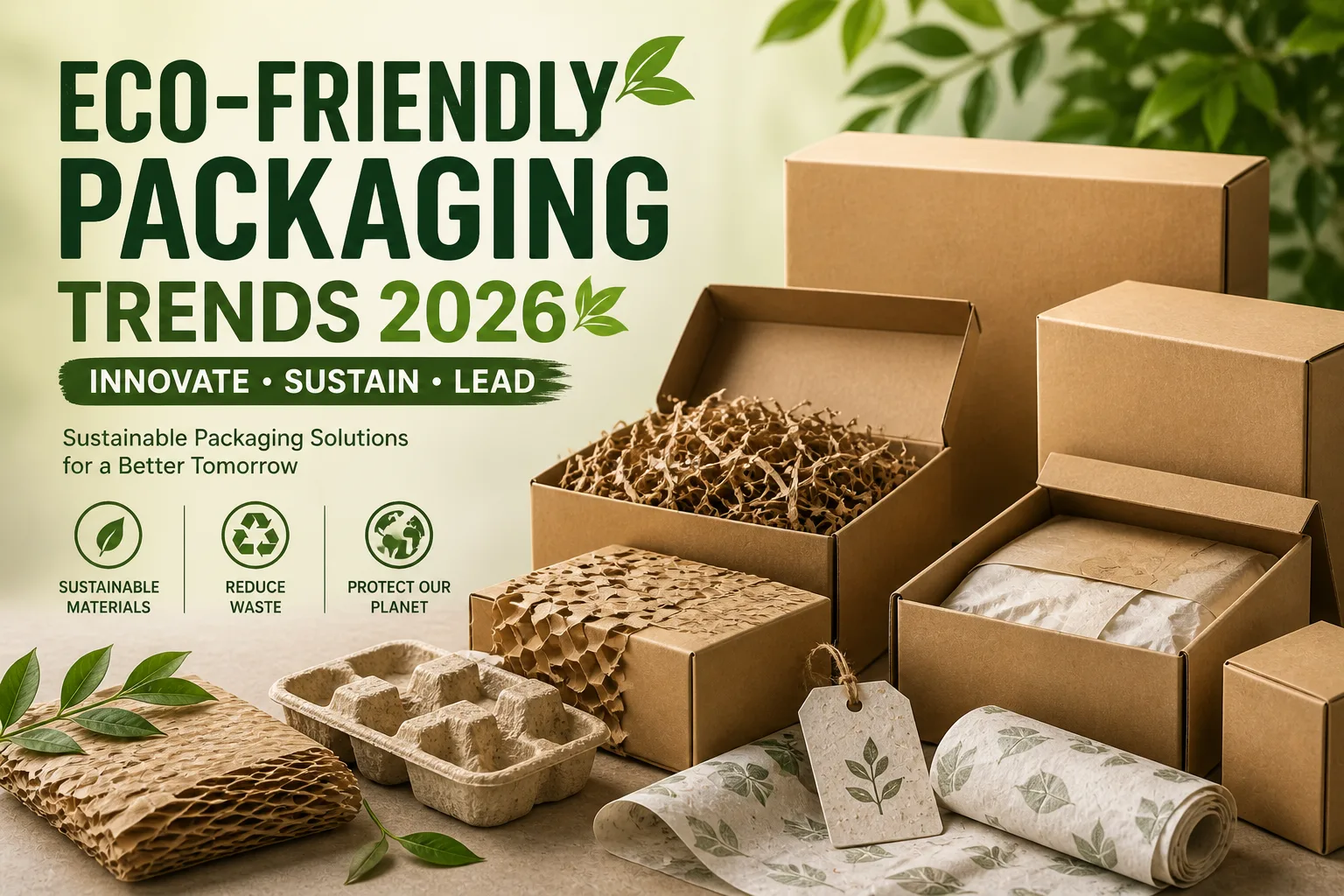
The global packaging industry has hit a turning point in 2026. Sustainability is now a core need for doing business worldwide. International plastic bans are tightening every month. Consumers now demand clear proof of environmental responsibility. Businesses failing to adapt face high regulatory penalties and cultural irrelevance.
At YAS Packaging, we see a radical shift in product presentation. We focus on protecting goods while preserving our planet. This report breaks down the eco-friendly packaging trends 2026 reshaping the market. We cover everything from high-end fashion to heavy-duty industrial components.
The 2026 Paradigm Shift: Toward Regenerative Design
The goal was once simply to “reduce” or “recycle” waste. In 2026, the focus has shifted to Regenerative Design. Recycling alone is no longer enough to meet global targets. Processing waste remains an energy-intensive and expensive task.
Leading sustainable packaging trends now rank materials that give back. We are moving away from “less harmful” plastics toward “net-positive” options. This means packaging must be home-compostable to be truly effective. It should dissolve in a garden bin within a few weeks. This shift significantly lowers long-term shipping and waste management costs.
Top Eco-Friendly Packaging Trends 2026 You Must Watch
In the United States and global markets in 2026, eco-friendly packaging is driven by material innovations that brands can no longer ignore in competitive industries. Businesses across the United States are rapidly adopting advanced solutions that balance sustainability, performance, and customer expectations without compromise. Mycelium-based packaging replaces traditional foam with biodegradable, high-strength cushioning for fragile products. Seaweed-based films offer transparent, flexible barriers that dissolve safely without leaving harmful residues behind. Digital-first packaging using QR and NFC technology reduces paper usage while improving customer interaction and product information access. These innovations are no longer optional but essential for United States brands aiming to meet strict regulations and evolving consumer demand.
Mushroom and Mycelium Growth
Styrofoam is effectively dead in the luxury electronics sector. It is replaced by mycelium-based cushioning grown from fungal spores. This material is fire-resistant and naturally water-repellent. Customers can toss it into flowerbeds once the unboxing is done. It turns into nutrient-rich soil in less than a month.
Seaweed-Based Barriers
Industries requiring transparency now use seaweed-based films for windows. These marine-safe materials offer a crystal-clear view of the product. They dissolve harmlessly in water and leave zero microplastics behind. They are perfect for small sachets and food-safe packaging.
Invisible Digital Tech Seals
We are cutting paper consumption through NFC and QR code integration. Most 2026 packaging now utilizes a “Digital First” approach. A single tap provides assembly videos and warranty information. This technology reduces physical paper waste by up to 40%.
Green Packaging Solutions for Heavy-Duty Industries
The automotive sector once struggled with sustainability due to oil products. In 2026, high-strength corrugated materials have changed the game.
Custom Auto Parts: High-Strength Corrugated
Brands now use Custom Auto Parts boxes made from recycled fibers. These are not standard, flimsy cardboard boxes for small items. We engineer them with vegetable-based resins to repel industrial grease.
Moving to these green packaging solutions reduces your total carbon footprint. It also lowers the cost of “empty” return shipping for retailers. These boxes are fully recyclable at their final destination.
Sustainable Packaging Trends in the Fashion World
Fashion leads global sustainability efforts and reshapes how consumers perceive packaging today. Packaging now defines brand experience and creates the first physical customer interaction. In 2026, brands have redefined unboxing as a key moment influencing purchase perception.
Consumers no longer treat packaging as disposable after receiving fashion products. Wasteful or plastic-heavy materials quickly damage trust before the product is revealed. Brands now design packaging to deliver long-term value beyond protection and shipping.
- Sustainability: recyclable, compostable, or biodegradable materials reduce environmental impact
- Reusability: packaging designed for storage, gifting, or repeated practical use
- Emotional impact: premium unboxing experiences improve customer satisfaction and perception
- Brand retention: packaging keeps brand presence visible in daily customer environments
Many brands now replace plastic mailers with reusable rigid or semi-rigid boxes. Material choices like kraft paper, recycled fibres, and plant-based inks reflect authenticity. Interactive elements like seed tags and compostable wraps enhance engagement.
Brands adopting these trends gain loyalty, while others risk becoming outdated.
Custom Apparel Boxes: The Luxury Keepsake Model
The era of the disposable plastic mailer is finally over. Leading brands now use rigid Custom Apparel Boxes as keepsakes. These boxes have high structural integrity and beautiful, minimalist designs.
Customers often reuse them for secondary home storage or resale. This keeps your brand name in their home for years. It turns a shipping container into a long-term marketing asset.
Seed-Embedded Haptic Paper
Seed-embedded paper is a viral trend for boutique apparel brands. We use it for hang tags and inner decorative tissue paper. Once unboxed, customers can plant the packaging in their garden. It grows into wildflowers or herbs, creating a living brand memory.
Innovative Eco-Friendly Packaging Ideas for Gourmet Sectors
The bakery industry must maintain freshness while avoiding plastic-based protective barriers. This challenge once limited eco-conscious brands from adopting fully sustainable packaging solutions. In 2026, new material innovations allow bakeries to protect products without harming environments.
Modern packaging now balances freshness, safety, and sustainability without relying on plastic coatings. Brands are adopting solutions that preserve taste while reducing environmental impact significantly.
- Aqueous coatings: Water-based layers provide grease resistance without plastic laminations
- Recyclable boards: Paper-based boxes remain strong while supporting easy recycling processes
- Breathable materials: Packaging allows airflow to maintain texture and prevent moisture buildup
- Compostable wraps: Natural films break down safely without leaving harmful residues
These innovations help bakeries maintain product quality during storage, transport, and customer handling. They also simplify disposal for customers, eliminating confusion around mixed-material packaging waste. As sustainability expectations rise, packaging now plays a key role in purchase decisions. Eco-friendly bakery packaging strengthens brand trust while aligning with modern environmental standards.
Custom Bakery Boxes: Grease-Proof Without Plastic
The 2026 solution is the Aqueous (Water-Based) Coating. Traditional boxes used thin plastic laminates to stop grease spots. Today, Custom Bakery Boxes use aqueous coatings for oil resistance.
These boxes remain recyclable in standard paper recycling bins. This makes cleanup easy for both the bakery and the customer. It eliminates the need for specialized plastic-sorting facilities.
Upcycled Fiber Food Stocks
We are seeing a surge in “Agricultural Waste” packaging materials. Custom Bakery Boxes are now crafted from wheat and sugarcane waste. Some even use cacao husks for a “Rustic-Luxe” tactile experience. This tells a sustainability story before the food is even tasted.
The Consumer Psychology of Haptic Trust
In 2026, brand relationships are built on Haptic Trust. Shoppers are now skeptical of high-gloss, bleached white packaging. They associate those finishes with harsh chemicals and plastic laminates.
The “raw” feel of unbleached Kraft paper signals true authenticity. Visible organic fibers have become a visual shorthand for premium quality. Customers now scan packaging for a “Sustainability Ledger” via QR codes. They want to see blockchain-verified reports on water and energy savings.
Overcoming Logistics Hurdles with Green Packaging Solutions
A common belief suggested eco-friendly packaging lacked strength for demanding logistics operations.
In 2026, advanced material science has completely disproven that outdated industry assumption. Modern green packaging now delivers durability, protection, and performance equal to traditional materials. Businesses no longer need to compromise product safety to achieve sustainability goals.
- High-strength materials: Reinforced bio-based packaging resists impact, pressure, and external damage
- Moisture resistance: Advanced coatings protect goods in humid and unpredictable environments
- Lightweight design: Reduced weight lowers shipping costs and improves transport efficiency
- Recyclability: Materials support circular systems without creating complex disposal challenges
These innovations ensure products remain secure throughout storage, handling, and long-distance shipping. They also reduce costs by optimising packaging size and eliminating unnecessary empty space.
AI-driven packaging systems now create precise, right-sized boxes for every product shipment. This reduces material waste while improving container space utilisation and delivery efficiency. Green packaging is no longer a limitation but a competitive advantage in modern logistics.
Durability vs. Ecological Impact
Reinforced bio-plastics now match the performance of traditional plastics. Our green packaging solutions offer elite puncture and moisture resistance. They protect Custom Auto Parts as effectively as any petroleum product. They keep Custom Bakery Boxes crisp in humid environments.
The “Right-Size” AI Revolution
AI-driven die-cutting is a major part of the eco-friendly packaging trends 2026. We create boxes that fit your product with no “shipping air.” This reduces material usage by 20% on every single order. It also allows you to fit more units into every shipping container.
Final Thoughts: Future-Proofing with YAS Packaging
The eco-friendly packaging trends 2026 are not just suggestions. They are the only path toward full 2030 regulatory compliance. Transitioning now saves your business from future taxes and fines. It builds a deeper bond with a new generation of shoppers.
At YAS Packaging, we help you navigate this complex transition. We provide rugged Custom Auto Parts containers and high-fashion boxes. We offer grease-proof Custom Bakery Boxes that the planet loves.
Contact YAS Packaging today to start your 2026 transformation.
